How to Tell the Difference Between Cast Iron and Steel Scrap
Cast iron and steel scrap may look similar, but their composition, physical properties, and recycling value can differ significantly. Identifying the material correctly helps businesses sort scrap more efficiently, avoid incorrect classifications, and prepare loads for better recycling outcomes.
Whether you are handling machinery components, automotive parts, construction waste, or manufacturing offcuts, knowing how to distinguish cast iron from steel is useful before sending materials to a recycling yard. Fortunately, several practical identification methods can help, although professional testing may be necessary for accurate classification.
What Is the Difference Between Cast Iron and Steel?
Both cast iron and steel are ferrous metals, meaning they contain iron as their primary component. The main difference lies in their carbon content and manufacturing process. Cast iron generally contains more carbon than steel, which makes it harder and more brittle. It is commonly used in engine blocks, machine bases, pipes, brake components, and heavy equipment parts.
Steel typically contains less carbon and is known for its combination of strength, toughness, and flexibility. It is widely used in structural beams, automotive panels, machinery, tools, and industrial components. These differences affect how each material looks, breaks, reacts to tools, and is processed during recycling.
1. Examine the Surface and Appearance
A visual inspection is a useful first step when identifying cast iron and steel scrap. Cast iron often has a dull, rough, or grainy surface, particularly when it has been broken or exposed to corrosion. Cast components may also have visible molding marks, thick sections, or irregular shapes resulting from the casting process.
Steel generally has a smoother or more uniform surface, especially when it comes from rolled sheets, beams, pipes, or machined components. However, rust, paint, scale, and industrial wear can make visual identification more difficult. Appearance alone should not be treated as definitive. Some cast steel components and heavily corroded steel scrap can resemble cast iron.
2. Compare Weight and Thickness
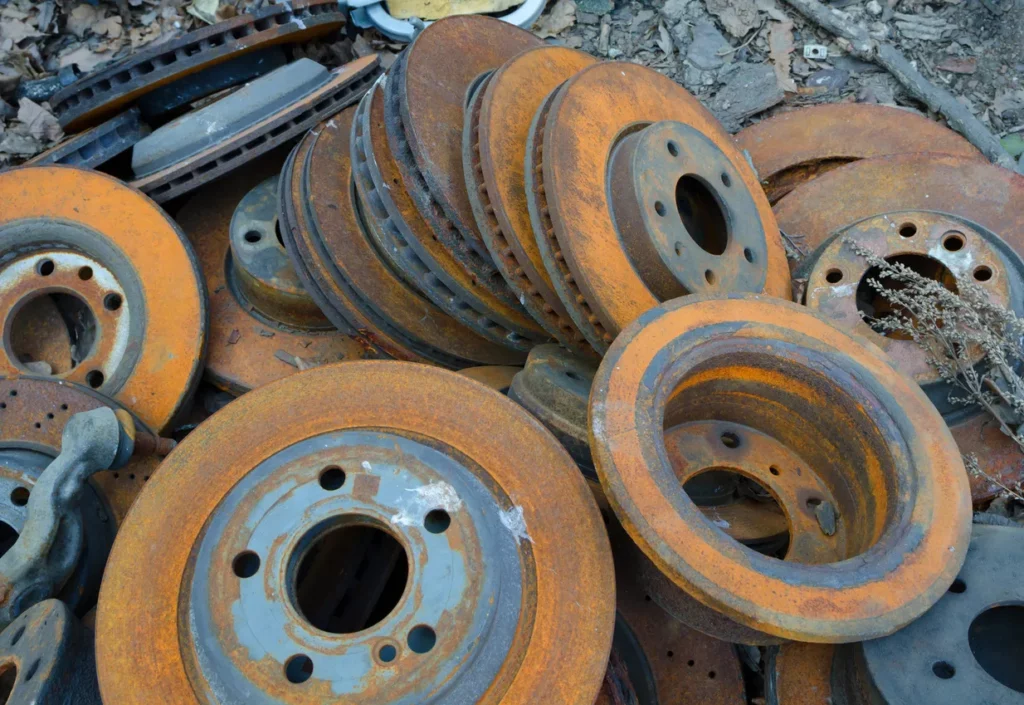
Cast iron is relatively dense, as is steel, so weight alone cannot reliably confirm the material. However, the design and thickness of the component may provide useful clues. Cast iron parts are often thick and bulky because the material is strong under compression but more vulnerable to impact and bending. Machine bases, brake drums, and heavy housings are common examples.
Steel components can be thinner while still providing substantial strength. Sheet metal, structural sections, tubing, and fabricated frames are frequently made from steel. When comparing two similarly sized objects, avoid assuming that the heavier one is automatically cast iron. Shape, thickness, internal cavities, and attached materials can all affect weight.
3. Look at How the Metal Breaks
The way a metal component fractures can provide a practical indication of its composition. Cast iron is brittle and may break or chip when subjected to a strong impact. A freshly broken surface can appear grainy, uneven, or dark gray. Certain types of cast iron, particularly gray cast iron, contain graphite flakes that contribute to its characteristic fracture behavior.
Steel is generally tougher and more ductile. Instead of breaking easily, many steel components may bend, deform, or develop a more fibrous-looking fracture.
This test should not be performed casually on unknown scrap. Breaking metal can create sharp fragments, flying debris, and other hazards. In an industrial setting, trained personnel should use appropriate protective equipment and controlled procedures.
4. Use a Grinder Spark Test Carefully
A spark test is a commonly used method for distinguishing ferrous metals. It involves observing the sparks produced when a metal sample contacts a grinding wheel. Steel often produces a stream of bright sparks that branch and vary in length, depending on its carbon content and alloy composition. Cast iron generally produces shorter, less pronounced sparks, although the exact appearance depends on the specific grade.
The results can be affected by:
- Carbon content.
- Alloying elements.
- Grinding wheel type.
- Surface contamination.
- Operator experience.
- The condition of the sample.
A spark test is not a substitute for laboratory analysis or professional material identification. It also creates sparks and potentially hot particles, so it should only be conducted in a controlled area with suitable safety precautions and fire prevention measures.
5. Check the Material’s Machining Characteristics
Machining behavior can offer additional clues when the material is processed in a workshop. Cast iron often produces short, brittle chips or powder-like debris during machining. Gray cast iron can machine relatively easily but may generate fine particles that require effective dust control.
Steel commonly produces longer, more continuous chips, particularly when machining ductile grades. The exact result depends on the steel type, cutting tools, machining conditions, and material hardness.
This method is most useful for experienced machinists and manufacturing personnel. It should not be used as the only basis for grading scrap, especially when the alloy or material history is unknown.

6. Consider the Original Application
The component’s original use can help narrow down its likely material type.
Cast iron is frequently found in:
- Engine blocks and cylinder heads.
- Heavy machine bases.
- Cast iron cookware.
- Brake drums.
- Drainage and older industrial pipes.
- Pump housings.
Steel is commonly used in:
- Structural beams and frames.
- Automotive body panels.
- Steel pipes and tubing.
- Machinery shafts.
- Fabricated equipment.
- Construction reinforcement and offcuts.
These are general associations rather than guarantees. Manufacturers use a wide range of alloys and production methods, so the original application should be considered alongside physical inspection and documentation.
Why Correct Identification Matters for Scrap Recycling
Correctly separating cast iron and steel helps recycling yards manage incoming materials more efficiently. Although both are ferrous metals, their composition, processing requirements, and commercial classifications may differ.
Mixed loads can require additional sorting and inspection. Contaminants such as rubber, plastic, oil, concrete, and nonferrous attachments may also affect the final classification and value. Businesses can improve scrap preparation by separating known material types, keeping similar components together, and maintaining documentation for specialized or high-value parts.
When Should You Seek Professional Identification?
Visual inspection and basic testing can help identify common scrap, but some materials require more advanced verification. This is especially true for alloy steel, cast steel, ductile iron, and components with unknown origins.
A professional scrap metal buyer may use material documentation, magnetic inspection, spark testing, or specialized metal analyzers to verify composition. Before separating a large industrial load, consult the recycling yard about its grading requirements.
Frequently Asked Questions
Q) Is cast iron heavier than steel?
A) Cast iron and steel have broadly similar densities. Perceived weight usually depends more on the component’s thickness, shape, and internal structure than on the material alone.
Q) Can a magnet distinguish cast iron from steel?
A) No. Both cast iron and most common steel grades are magnetic, so a magnet can identify many ferrous materials but cannot reliably distinguish between them.
Q) Does cast iron break more easily than steel?
A) Generally, yes. Cast iron is more brittle, while many steel grades are more ductile and can bend or deform before breaking.
Q) Can a spark test identify cast iron?
A) A spark test can provide useful clues, but results vary by grade and testing conditions. Professional verification may be necessary for accurate identification.
Q) Is cast iron worth less than steel scrap?
A) The value depends on the material grade, local market conditions, contamination, preparation, and buyer specifications. Cast iron and steel may be priced differently even though both are ferrous metals.
Q) Can cast iron and steel be recycled together?
A) They can enter the same general ferrous recycling stream, but separating them may be necessary depending on the buyer’s grading standards and processing requirements.
Distinguishing cast iron from steel scrap involves examining appearance, thickness, fracture behavior, spark patterns, machining characteristics, and the component’s original application. No single method is reliable for every material, particularly when scrap is corroded, coated, mixed, or made from an uncommon alloy.
For manufacturers, contractors, and industrial businesses, accurate sorting can reduce processing complications and support more consistent scrap management. Working with an experienced recycling partner ensures that uncertain materials can be evaluated using appropriate identification and grading methods.
Hope the tips mentioned in this article help you to get the best out of your scrap.
Ready to turn your scrap into savings?
Reach out to Clifton Metals to schedule your site assessment and see how easy and profitable on-site scrap management can be.
Are you a manufacturer seeking sustainable metal solutions? Let Clifton Metals’ recycling services highly trained experts in scrap metal handling help power your production with quality recycled metals, keeping costs low and the environment clean. Contact us today to learn more.